Growing Up in Palos Verdes: Christian Campisi’s Neighborhood Story

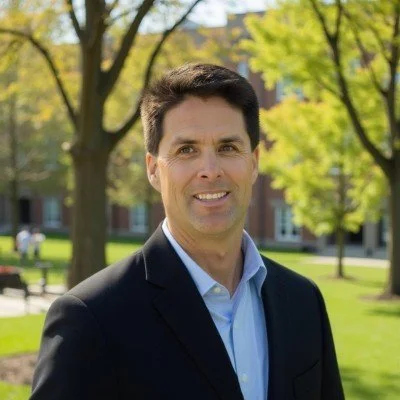
Growing Up, Coming Home and Caring for Palos Verdes
A walking conversation with Christian Campisi about childhood freedom, Monte Malaga traditions, Palos Verdes Estates open space, civic service and the enduring pull of home.
Some neighborhood stories are best told while moving through the places that shaped them. For this installment of Cliff’s Notes: Voices of the Neighborhood, Christian Campisi and I met at Neptune Fountain in Malaga Cove and set out on foot through the hills of Palos Verdes Estates. As we climbed Matthews Trail and the Del Sol Fire Road, the Queen’s Necklace and the South Bay opened below us. We returned by way of Via Del Monte, talking about childhood, family, community traditions, local government and the qualities that make Palos Verdes feel both connected to Los Angeles and wonderfully removed from it.
Preserving the Living Story of a Neighborhood
Cliff’s Notes: Voices of the Neighborhood is an ongoing oral history project that captures the stories, memories and firsthand experiences of the people who know a neighborhood best: its residents.
Through relaxed conversations with longtime homeowners, community leaders, business owners, educators and other local voices, the series preserves the history, character, traditions and evolution of each neighborhood beyond what maps, statistics or real estate data can tell us.
Each interview becomes a lasting community resource that may be shared through Scherb Homes Group neighborhood and Street Guides, articles, video, podcasts, social media and future publications. The goal is to create an authentic archive of neighborhood life while helping current and future residents better understand what makes each South Bay community unique.
Every conversation is another chapter in the living story of the neighborhood.
Christian Campisi’s Palos Verdes Story at a Glance
A Conversation Best Experienced on Foot
Our conversation began at Neptune Fountain in Malaga Cove. From there, we climbed Matthews Trail and continued along the Del Sol Fire Road. The route offered sweeping views of the Queen’s Necklace, the coastline and the cities spread across the South Bay.
We eventually descended toward Via Del Monte, passing hillside paths, neighborhood cut-throughs and overlooks that illustrate one of the most distinctive qualities of Palos Verdes Estates: there are often several ways to move through the community, each with its own views and sense of discovery.
The walk itself became part of the interview. Christian pointed out trails, parks, schools and connections between neighborhoods that would be difficult to understand from a map alone.
In Palos Verdes, local knowledge often lives in the spaces between the streets: a trail behind a school, an overlooked stairway, a canyon route, a neighborhood park or a cut-through that residents have used for generations.
Arriving in Palos Verdes as a Child
Christian first moved to Palos Verdes Estates near the end of first grade. His family was still waiting for their home to close, so for a brief period, they commuted from Torrance while he began attending school on the Peninsula.
He remembers waiting near school for his older brother and then making the drive back down the hill. The commute itself was temporary, but it made the eventual move into Palos Verdes feel like the beginning of a new chapter.
Once settled near Lunada Bay, the neighborhood quickly became his world. The streets, schools, playing fields and nearby open spaces gave him the type of independence that many people associate with growing up in a smaller town.
“You could jump on a bike and have the freedom to pedal almost anywhere.”
That freedom was not limited to one park or one planned activity. It came from the way homes, schools, fields, canyons and local businesses were connected. A bike ride could become a game at a school field, a trip to a neighborhood market or an afternoon exploring trails with friends.
A Landscape Made for Exploring
Some of Christian’s strongest memories center on the area around Palos Verdes Intermediate School and the surrounding trails and fields. It was close enough to become a natural gathering point for baseball, soccer, bike riding and informal exploration.
The routes behind the school, including what residents now recognize as established cross-country and open-space trails, felt much less formal to the children who used them decades ago. They were places to ride mountain bikes, invent games and test their sense of adventure.
Lunada Canyon also played a major role in his childhood. Christian and his friends explored its creek beds, slopes and branching paths on foot. They built makeshift bicycle ramps, flattened seasonal grass to create improvised sliding runs and learned to navigate terrain that felt expansive and wild.
There were risks, including steep slopes and occasional encounters with rattlesnakes, but there was also an important education taking place. The children learned how to read the landscape, recognize their limits and find their way home.
- Room for unscheduled outdoor play
- Connections between schools and neighborhoods
- Opportunities to bike, hike and explore independently
- Daily contact with native terrain and wildlife
- A sense of freedom within a residential community
Childhood stories show how public land and neighborhood design affect more than appearance or property values. They influence independence, friendships, physical activity, confidence and a child’s relationship with nature.
The value of Palos Verdes open space is not only scenic. It is experiential. It shapes how residents move, gather, play and remember their childhoods.
Growing Up Around Lunada Bay
Christian’s memories of Lunada Bay include the small businesses and everyday stops that made the neighborhood feel self-contained. The commercial center was quieter and simpler than it is today, with local banks, small shops, a video store and a neighborhood market.
He remembers visiting a local pizza restaurant for a square slice or a sandwich and stopping at the market that served as the neighborhood grocery store. These were not destination businesses in the modern sense. They were familiar places woven into the weekly routines of local families.
That small-town character mattered. Children could ride down from nearby streets, meet friends, buy something inexpensive and make their way home. The commercial district served a practical purpose, but it also gave young residents a safe and recognizable place to begin interacting with the community independently.
The Long Ride for a Slurpee
One of Christian’s favorite examples of childhood independence was the ride from his neighborhood toward a 7-Eleven farther up the hill. The route required cut-throughs, climbing and a meaningful amount of effort for a child on a bicycle.
The reward might be a Slurpee or a hot dog bought with a few dollars carried in a pocket. The trip home was easier and mostly downhill. The destination was ordinary, but the journey made it memorable.
Stories like this capture a version of childhood that is difficult to measure: the satisfaction of navigating a route, earning a small reward and returning home with friends.
Sometimes You Understand Home Only After Leaving It
Christian attended local schools, participated in AYSO soccer and Little League, and continued through the Palos Verdes school system. Like many local students, he eventually left the Peninsula for college.
He described high school graduation as a more meaningful dividing line than many students recognize at the time. It is not simply the end of school. For many young people raised in Palos Verdes, it is the end of living full-time in the place that defined their childhood.
Christian went to college in Chico, where the flat agricultural landscape and inland setting felt dramatically different from the hills, views and coastline he had always known.
“That was when I started realizing how good I had it.”
He returned to Palos Verdes during summers, worked locally and spent time at the beach before going back to school each fall. The separation clarified his attachment to the Peninsula.
Returning permanently as an adult took time. Like many people raised in Palos Verdes, he first built a life elsewhere in the South Bay. He lived in Hermosa Beach, developed his career and accumulated enough equity and financial stability to eventually purchase a home back in Palos Verdes Estates.
He and his family returned in 2017.
Coming back to Palos Verdes is often more than a real estate decision. For former residents, it can represent the completion of a long personal arc: childhood, departure, perspective and return.
Raising a Family Near Monte Malaga
Christian now lives with his family near Monte Malaga, not far from the schools, parks and open spaces that define the neighborhood. The setting gives his children some of the same advantages he remembers from his own childhood, while also offering a strong network of families and community activities.
Montemalaga Elementary School serves as more than an educational campus. Its playground, basketball courts and grass fields function as gathering spaces outside school hours, particularly for families with younger children.
Nearby Monte Malaga Plaza, where several residential streets meet, provides another informal center for neighborhood life. The park has long prompted questions about the original vision for the site and whether it was once intended to support a more formal neighborhood landmark or gathering place.
Whatever its earliest purpose may have been, the park now plays a clear community role. It is where neighbors meet, children play and traditions are passed from one group of families to the next.
- A central elementary school campus
- Neighborhood parks and gathering areas
- Quiet residential streets
- Access to trails and hillside walks
- Strong connections among local families
Christian’s experience illustrates how Monte Malaga functions for many families: it is residential and peaceful, but not isolated. Schools, parks and shared traditions create regular opportunities for neighbors to see one another and build relationships.
Halloween, Parks and the Families Who Keep Traditions Going
One of the largest annual neighborhood gatherings takes place around Halloween. Families meet at Monte Malaga Plaza in costume, bring food and spend time together before children begin trick-or-treating through nearby streets.
The gathering can include dozens of families and a large group of children moving through the neighborhood together. Because the streets are generally quiet and familiar, the evening feels festive, communal and manageable for parents.
Christian’s family did not create the tradition. They inherited it from other residents as their own children entered school. Over time, they helped organize and sustain it, understanding that another family will eventually need to take over.
“If somebody does not take the helm, traditions can disappear.”
This pattern appears throughout Palos Verdes. Long-running block parties, holiday gatherings, school events, civic ceremonies and neighborhood customs depend on residents who are willing to contribute their time.
Traditions may appear permanent from the outside, but most are renewed one year at a time by people who make calls, bring tables, invite neighbors and encourage younger families to participate.
A strong neighborhood culture is rarely accidental. It is created and preserved by residents who understand that showing up matters.
Learning How a City Works—and Choosing to Participate
Christian’s interest in civic life began with the example set by his mother. She volunteered, organized fundraisers and consistently stepped forward to help with community activities during his childhood.
As a young adult living in Hermosa Beach, Christian participated in Leadership Hermosa Beach, a program designed to teach residents how local government operates. Participants learned about public works, law enforcement, city administration, budgeting and the responsibilities of elected and appointed officials.
He later helped run the program, reinforcing his belief that communities function better when residents understand how decisions are made.
After returning to Palos Verdes Estates, Christian pursued opportunities to serve locally. An early application for a city committee did not result in an appointment, but he later received an invitation to apply for an opening on the Planning Commission.
The appointment placed him in a more significant role than he had originally expected. Over time, he became more comfortable reviewing project details, listening to testimony, visiting sites and balancing the concerns of homeowners, neighbors and the broader community.
He eventually became chair of the commission after encouragement from an experienced colleague.
Christian believes participation begins by attending meetings, volunteering at schools and being present at community events.
Local decisions often involve legal, financial and operational details that cannot be reduced to a slogan or short social-media comment.
One of his goals is to show his children that when something matters, residents can contribute rather than waiting for someone else to solve it.
Local government feels abstract until a resident learns how decisions are made. Education can turn frustration into constructive participation.
How Christian Describes the Personality of Palos Verdes Estates
When asked to describe the personality of Palos Verdes Estates, Christian first returned to its history. The city was among the earliest incorporated communities on the Peninsula and was created through a deliberate planning vision.
That history remains visible in the street patterns, parklands, architecture and limited commercial development. The city feels established rather than recently assembled.
He also described Palos Verdes Estates as somewhat under the radar. Many Southern California residents know it exists, but the city is not usually encountered by accident. Visitors often need a reason to come onto the Peninsula or a specific destination in mind.
Once they arrive, the transition can feel immediate.
“There is a certain exhale when people come into Palos Verdes. You know you are in a different place.”
The city is almost entirely residential. It does not face many of the development questions confronting larger municipalities with industrial areas, freeways, hotels or high-rise commercial projects. Most Planning Commission matters involve homes, remodels and new residential construction.
That narrow focus contributes to the city’s sense of continuity. It also means residents pay close attention to changes that might affect views, privacy, scale or neighborhood character.
A planned coastal community with an identity shaped by early design decisions and longstanding institutions.
Close to Los Angeles, yet rarely experienced unless someone intentionally travels onto the Peninsula.
A place where residents care deeply about open space, density, architecture and the long-term character of the city.
Defined by ocean views, canyons, parklands, trails and an unusually close relationship between residential streets and open land.
Within reach of Los Angeles jobs, culture, sports, concerts, airports and economic opportunity.
A community that can feel far removed from the pace and intensity of the surrounding metropolitan region.
What Christian Hopes Never Changes
Christian’s answer centered on two closely related qualities: open space and low residential density.
He recognizes that housing policy, state mandates and long-term growth pressures will continue to shape conversations throughout California. At the same time, he believes Palos Verdes Estates should protect the fundamental qualities that distinguish it from more intensively developed areas.
The city is largely built out, although undeveloped residential lots remain. Future infill may add individual homes, but responsible development should preserve the broader pattern of low-density neighborhoods, mature landscapes and open land.
Christian also emphasized the importance of maintaining city services and infrastructure. The limited commercial base is part of the city’s appeal, but it creates financial constraints because Palos Verdes Estates does not have the same volume of sales-tax-generating businesses as larger cities.
New local businesses can contribute meaningful activity and revenue, but they are unlikely to change the city’s essential residential character. The long-term challenge is finding a sustainable balance between preserving what residents value and funding the services required to protect it.
What This Conversation Reveals About Living in Palos Verdes
Open space becomes part of family identity.
It is not simply land preserved around homes. It becomes the setting for childhood exploration, daily exercise, family walks and lifelong memories.
Schools often function as community centers.
Fields, playgrounds and courts bring families together beyond the classroom and help create relationships among neighbors.
Small traditions build lasting community.
Halloween gatherings, block parties and local ceremonies matter because they give residents repeated reasons to know one another.
Leaving can deepen appreciation.
Many former residents understand the distinctiveness of Palos Verdes only after experiencing life elsewhere.
Returning home can take decades.
Career development, equity and family timing often determine when someone raised on the Peninsula can realistically return.
Preservation requires participation.
Community character survives when residents learn how local institutions work and contribute their time, judgment and energy.
Christian’s story is not only about growing up in Palos Verdes. It is about recognizing the value of a place, returning with a family and accepting responsibility for helping preserve it.
Frequently Asked Questions About Christian’s Palos Verdes Story
Where did Christian Campisi grow up?
Christian moved to Palos Verdes Estates near the end of first grade and grew up in the Lunada Bay area. His childhood included local schools, sports, neighborhood businesses, bicycle routes, canyons and open-space trails.
Where does Christian live now?
Christian and his family live near Monte Malaga in Palos Verdes Estates. The neighborhood’s schools, parks, views and family traditions are important parts of their daily life.
What does Christian value most about Palos Verdes Estates?
He places particular value on open space, low-density neighborhoods, natural beauty, quiet streets, community traditions and the ability to live near Los Angeles while feeling removed from its intensity.
Why did Christian return to Palos Verdes?
Living elsewhere helped him understand how unusual his childhood environment had been. After building his career and financial foundation, he and his family returned to Palos Verdes Estates in 2017.
What are some of Christian’s childhood memories of Lunada Bay?
His memories include riding bikes to schools and neighborhood businesses, playing sports, exploring Lunada Canyon, building improvised ramps and spending long periods outdoors with friends.
What makes Monte Malaga appealing to families?
Monte Malaga offers Montemalaga Elementary School, neighborhood parks, quiet residential streets, access to trails and gathering spaces where families can build lasting connections.
How has Christian participated in local government?
His civic background includes participation in Leadership Hermosa Beach and service on the Palos Verdes Estates Planning Commission, where he developed experience reviewing residential projects, hearing public testimony and evaluating community concerns.
What is Cliff’s Notes: Voices of the Neighborhood?
It is a Scherb Homes Group oral history and local-knowledge project documenting the memories, traditions and firsthand perspectives of South Bay residents, community leaders, educators and business owners.
Real Estate Data Can Describe a Home. Local Stories Explain a Community.
Whether you are considering a move within Palos Verdes, returning to the Peninsula or learning about the South Bay for the first time, firsthand neighborhood knowledge can provide context that listings and statistics cannot.
Thank You, Christian
Thank you to Christian Campisi for sharing his time, memories and perspective during our walk through Palos Verdes Estates.
Conversations like this matter because communities are more than streets, homes and boundaries. They are shaped by the people who remember what came before, participate in the present and help prepare the way for the next generation.
Christian’s story preserves a valuable record of growing up in Lunada Bay, returning home to raise a family near Monte Malaga and choosing to contribute to the civic life of Palos Verdes Estates.