What It’s Like to Live in Rancho Palos Verdes: Jeremy Vanderhal on Family, Flying & Community

What It’s Like to Live in Rancho Palos Verdes: Jeremy Vanderhal on Family, Flying and Finding Home
From a career in military aviation to walking his daughter to school, Friday morning runs, Adventure Guides and a deepening commitment to the Palos Verdes community, Jeremy Vanderhal shares why Rancho Palos Verdes became much more than a place to live.
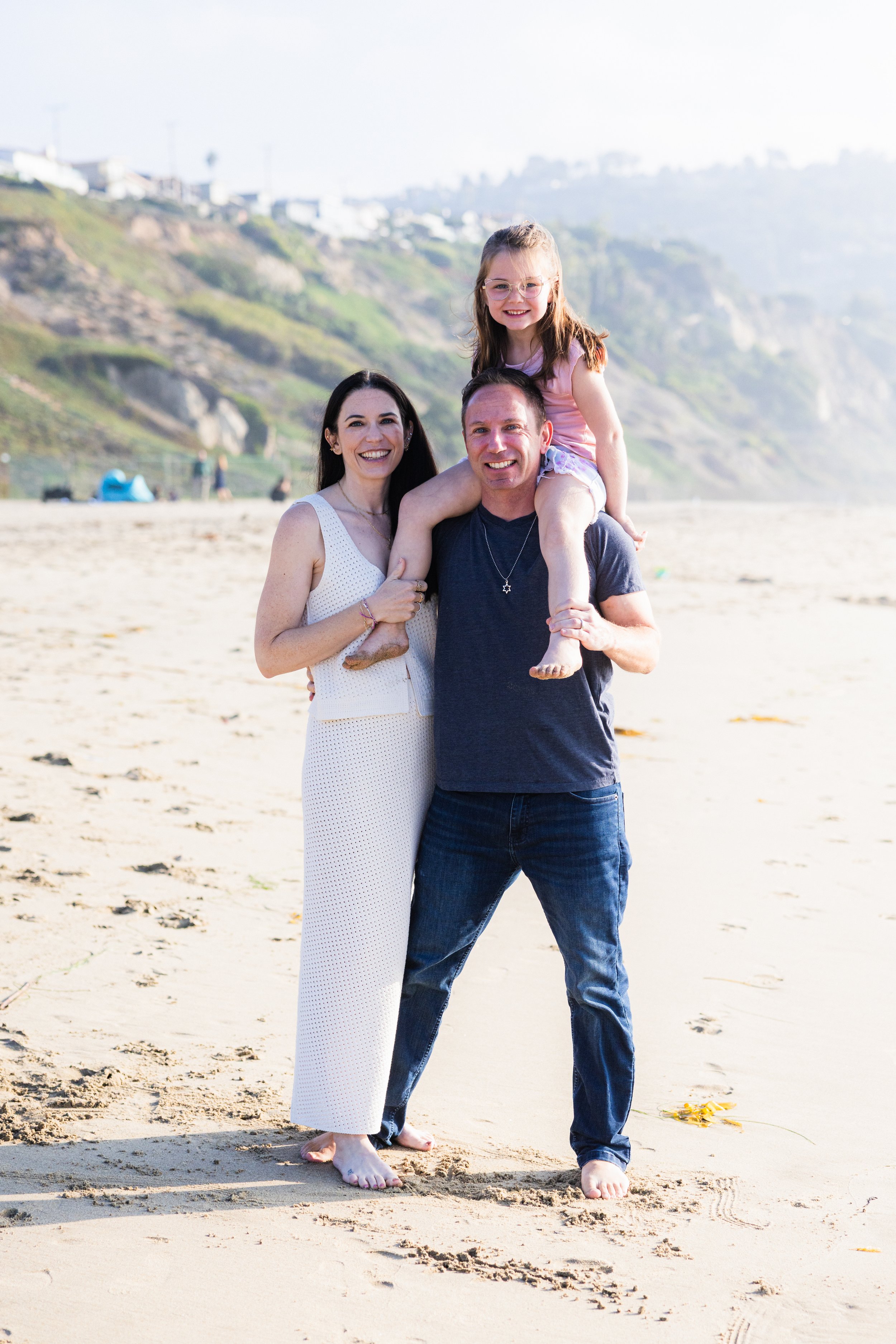
For this edition of Voices of the Neighborhood, I sat down with Jeremy at Yellow Vase to talk about his family’s move from West Hollywood to Rancho Palos Verdes, raising a daughter in the Silver Spur area, the small-town feel of the Peninsula, his path from a high-school aviation class to the Air Force Academy, and why he hopes Palos Verdes still feels like home to the next generation decades from now.
Jeremy Vanderhal’s Rancho Palos Verdes Story
Family, schools and roots
Jeremy and his wife, Katie, moved from West Hollywood to Palos Verdes as they began thinking about raising a family.
Silver Spur
Their home in Silver Spur offered the quieter residential setting, outdoor space and family-friendly environment they wanted.
Walkable family routines
One of Jeremy’s favorite routines is walking his daughter Noa to school and sharing the walk home with Katie.
Connections everywhere
School, Adventure Guides, synagogue, running and neighborhood life have created a level of community Jeremy says he had never experienced elsewhere.
A life shaped by aviation
A high-school aviation science elective ultimately led Jeremy to flying helicopters, the U.S. Air Force Academy and military aviation.
Keep the small-town feel
His hope is simple: protect the community character, strong schools and sense of belonging that made RPV feel like home.
From West Hollywood to Rancho Palos Verdes
Jeremy did not grow up dreaming about living on the Palos Verdes Peninsula. In fact, before meeting Katie, he barely knew the area.
Katie had grown up in Lunada Bay and attended Peninsula High School. When the two were newly married, West Hollywood worked perfectly well for that chapter of their lives. But once they began talking about having children, the calculation changed quickly.
Katie suggested returning to Palos Verdes. Jeremy jokes that at the time he knew so little about the Peninsula that he needed navigation every time they visited her parents.
When Katie asked what he wanted in their future house, Jeremy had one especially practical request: he wanted to be reasonably close to a grocery store. After living in a much denser part of Los Angeles, he did not want a simple errand for milk to become a major excursion.
They ultimately found their home in the Silver Spur neighborhood of Rancho Palos Verdes. The home checked Jeremy’s practical box while giving the family something they would come to value far more: a place to put down roots.
“Within a few years of moving here, I started running into people I knew everywhere.”
— Jeremy VanderhalThis is one of the most common things people discover after moving to Palos Verdes. The Peninsula can feel geographically spread out when you first arrive, but socially it becomes surprisingly small. School, sports, neighborhood events, restaurants and community groups begin overlapping, and suddenly a trip to the store rarely feels anonymous.
What Jeremy Likes About Living in Silver Spur
Jeremy’s experience in Silver Spur illustrates something that is especially important for anyone considering a home in Rancho Palos Verdes: two homes that appear close together on a map can live very differently.
His family specifically valued a quieter residential setting with limited traffic. That gave their daughter more freedom to enjoy the neighborhood while creating the peaceful environment they wanted for family life.
Their location also gave them outdoor space and a view. But Jeremy quickly discovered another Palos Verdes reality: microclimates can change dramatically over relatively short distances.
At their home, higher on the hill, temperatures can be significantly warmer than down toward Lunada Bay. Adding shade to their outdoor space through a pergola transformed how much they could comfortably use the yard.
- View orientation
- Elevation and temperature
- Street slope
- Walkability
- Traffic exposure
- Sun and shade
- Outdoor usability
- Neighborhood activity
Jeremy noted that even homes located relatively close to one another can have very different views, orientations and outdoor experiences.
Those subtle differences can materially affect both the experience of living in a home and its market value.
Palos Verdes is a micro-market in the truest sense. You cannot reliably value a house simply by looking at the home next door. A slight change in elevation or orientation can affect the view, temperature, topography, floor-plan utility and overall experience. Silver Spur is a great example of why understanding these hyperlocal differences matters when comparing homes in RPV.
Raising a Daughter in Rancho Palos Verdes
When Jeremy talks about what makes Palos Verdes special, the answer is not primarily about ocean views or real estate. It is about routines.
Whenever weather allows, Jeremy and Katie walk Noa to school. For Jeremy, the walk has become much more than transportation.
It creates uninterrupted time for conversation. As Noa has grown older, Jeremy has noticed those conversations becoming more thoughtful and sophisticated. After dropping her off, Jeremy and Katie walk home together, giving them time to reconnect before beginning their own workdays.
“We have these really interesting conversations, and as she’s been getting older, the conversations are getting a little more sophisticated.”
— Jeremy VanderhalIt is a small routine, but it captures a broader reason many families value this part of the Peninsula: daily life can happen at a more human pace.
Adventure Guides, Running and Becoming Part of the Community
Jeremy and I originally crossed paths through our daughters, and our lives continued overlapping through the local running group and YMCA Adventure Guides.
Adventure Guides became particularly meaningful for Jeremy. Noa already knew many of the children through school, but for Jeremy the program filled a different need: it introduced him to other fathers with children in the same stage of life.
Those relationships expanded outward. A school parent became someone he saw at Adventure Guides. A fellow dad became someone he ran with. Those same people started appearing at community events, restaurants and around town.
School
Daily routines naturally connect families whose children grow up together.
Adventure Guides
Shared experiences create friendships among both children and parents.
Running
Friday morning runs add another layer to an already overlapping community.
Jeremy described the result as feeling fully embedded in a community in a way he had never experienced before.
“I never felt the really intertwined sense of community that I have here.”
— Jeremy VanderhalThe High-School Class That Changed Jeremy’s Life
Jeremy’s career path could easily have gone in a completely different direction.
As a teenager, he was interested in video production and thought he might eventually work in movie special effects. Then his school offered an experimental aviation science elective taught by a flight instructor.
Jeremy signed up partly because the class sounded interesting and, he admits with a laugh, partly because he thought it might be relatively easy.
Instead, the course became essentially a ground school in aviation. Students learned the science of flight, navigation and how aircraft actually operate.
After the class, Jeremy’s instructor helped him prepare for an FAA written examination and then took him on a helicopter flight around Los Angeles.
Jeremy had never flown in a helicopter before.
“That changed the entire course of my life. I was like, ‘This. I need to do this.’”
— Jeremy VanderhalSoon, his schedule looked very different from that of most high-school students: finish class, drive to Van Nuys, learn to fly, return home and do homework.
Aviation ultimately led him to the U.S. Air Force Academy and a career that would take him around the country and beyond.
Years later, Jeremy tracked down that original teacher and told him what had happened after that first aviation class. His former instructor was amazed to learn how far a single opportunity had carried one of his students.
There is a powerful education story inside Jeremy’s aviation story: one great teacher, one unexpected class and one new experience can change the direction of a young person’s life. It is easy to understand why Jeremy places such a high value on schools and educators today.
What the Air Force Academy Taught Him Beyond Flying
Life at the Air Force Academy required Jeremy to manage traditional academics alongside military education, inspections, training and institutional responsibilities.
He added one more demanding commitment because he loved flying: becoming a glider instructor pilot.
That meant taking students who had never flown an airplane and helping them progress to the point where they could operate a glider on their own.
Jeremy found the teaching side especially rewarding. But the broader Academy experience taught him something that remains central to how he approaches work and life: identify what actually matters and concentrate on it.
“There’s always something that’s the most important thing, and you have to figure out what that most important thing is and do that.”
— Jeremy VanderhalHe describes it as learning how to tune out the noise and maintain focus, even when multiple demands are competing for attention.
Military Service, Aviation and Choosing to Be Home
Before Noa was born, travel was a normal part of life for both Jeremy and Katie.
Jeremy’s military responsibilities included temporary assignments, exercises and other periods away from home. He later combined part-time Air National Guard flying with airline work, two careers that could keep him away for substantial portions of a month.
Once he became a father, the equation changed.
Jeremy eventually decided that being physically present for his family needed to carry more weight. In 2023, he took full-time military orders for a Los Angeles-based desk role and stepped away from airline flying through a military leave of absence.
It allowed him to continue contributing to the mission while being home for nights, weekends, school routines and everyday family life.
“I can still contribute to the mission, but also be able to be present for her.”
— Jeremy VanderhalWhat a Typical Weekend Looks Like in RPV
Like many parents, Jeremy laughs that his “perfect Saturday” usually revolves around his daughter’s schedule.
Noa discovered ice skating while attending preschool locally. What began as a basic effort to make her comfortable on the ice developed into something much bigger when she announced that she wanted to play hockey.
Today, weekend hockey often takes the family to El Segundo, while much of the rest of their life remains close to home.
- Silver Spur Park for biking, rollerblading and playground time
- Local school and after-school activities
- Congregation Ner Tamid
- Movies and relaxed weekends at home
- Trader Joe’s errands together
- Red Onion
- RedBo
- Yellow Vase
- Kim’s Barbecue
- Neptune’s for ice cream
One particularly memorable family tradition emerged on the first day of school. Jeremy and Katie let Noa choose any restaurant she wanted for a celebratory meal.
Her choice: Red Onion.
It is exactly the kind of detail that says more about living somewhere than any neighborhood brochure ever could.
Why Being “Far From the Freeway” Can Be a Feature
Ask people from outside the Peninsula what they know about Rancho Palos Verdes and eventually someone will mention the distance from the freeway.
Jeremy has heard it plenty of times.
His response is that the very thing outsiders sometimes see as an inconvenience is part of what creates the lifestyle residents value.
Coming from West Hollywood, where even simple errands could require planning around traffic and parking, Jeremy appreciates the slower pace. In RPV, everyday activities can feel easier.
“It’s kind of a slower pace of life. In your twenties and single, that might not be for you. Forties, married, kids? This is exactly the right thing for me.”
— Jeremy VanderhalHe also sees the Peninsula and greater South Bay as remarkably self-contained. School, activities, parks, shopping, restaurants and entertainment are all close enough that a family can spend much of its week nearby without feeling like something is missing.
Less Through-Traffic
Distance from major freeways helps many residential neighborhoods retain a quieter feel.
Local Routines
Schools, activities, parks and errands can often remain within a relatively compact daily radius.
Community Overlap
Because people spend so much time locally, familiar faces become genuine relationships.
Why Jeremy Became More Involved With Palos Verdes Schools
Schools were one of the central reasons Jeremy and Katie chose Palos Verdes in the first place.
Katie had attended schools in the district herself and believed strongly in the educational environment. Jeremy initially viewed that as one of the benefits of moving to the area without paying particularly close attention to school governance.
That changed as Noa entered school and Jeremy began studying the district more closely.
He began researching what a school board actually does, how district budgets work and where he believed his professional background could contribute. That eventually led him to run for the Palos Verdes Peninsula Unified School District Board of Education.
During our conversation, Jeremy emphasized school funding as one of his principal concerns. He argues that California’s school funding formula leaves PVPUSD receiving materially less per student than the statewide average, creating long-term pressure on staffing, programs and district finances.
Jeremy’s position is that a school board’s responsibility extends beyond internal governance and should include stronger advocacy for the district at the state level.
“If the schools are why we moved here, I owe it to myself to make sure the schools stay as great as they’ve always been.”
— Jeremy VanderhalDoor-to-door conversations have also introduced Jeremy to residents whose experiences he says he might never otherwise have heard. He described meeting one local parent with professional audiovisual expertise who had volunteered time helping area schools, an encounter that reinforced Jeremy’s belief that community knowledge can be an underused resource.
What Jeremy’s Experience Says About Buying a Home in Rancho Palos Verdes
Our conversation eventually returned to houses, which is almost unavoidable in Palos Verdes because the land itself plays such a large role in how a home feels.
Jeremy pointed out that even within a relatively compact part of Silver Spur, views can change dramatically from one property to another. One home may capture a city or mountain outlook while another nearby property may have a very different orientation.
Hills create similar differences in walkability. A quieter residential setting can be wonderful for children and traffic, while nearby slopes and elevation can still have a meaningful impact on how the neighborhood functions day to day.
- Quiet residential streets
- Views and elevation
- Outdoor living
- Neighborhood privacy
- Proximity to schools and local activities
- A strong community network
- Street slope
- Actual usable yard area
- Sun exposure
- Microclimate
- View protection and orientation
- Walkability in practice, not just on a map
When buying in Rancho Palos Verdes, “location” means more than neighborhood name. Elevation, view corridor, topography, school proximity, traffic pattern and microclimate all matter. The best home is not simply the largest or most updated one—it is the property whose location and layout fit how your family actually wants to live.
What Jeremy Hopes Never Changes About Rancho Palos Verdes
Toward the end of our conversation, I asked Jeremy to imagine that we were sitting at Yellow Vase again twenty years from now.
What would he hope had remained the same?
His answer returned to the same theme that had appeared throughout the interview: community.
He hopes Rancho Palos Verdes retains its small-town feel. He hopes people still know one another, that the Peninsula does not become overly commercialized or crowded, and that the schools remain strong.
Most personally, he hopes Noa can go off into the world, build a life of her own and still come back to Rancho Palos Verdes with the unmistakable feeling that she has returned home.
Jeremy told me that when the family has casually discussed the possibility of living somewhere else years from now, Noa already has an opinion.
She wants to stay in the house where she grew up.
“I hope when she comes home, she still feels like this is her home.”
— Jeremy VanderhalFor a family that moved here looking primarily for schools and a good place to raise a child, that may be the strongest endorsement of the decision they could receive.
What Jeremy’s Story Reveals About Living in Rancho Palos Verdes
Community compounds over time
What begins as knowing a few school parents can become an overlapping network of neighbors, friends, teammates and community groups.
Small routines matter
Walking to school, visiting a neighborhood park or seeing familiar faces at a local restaurant often defines quality of life more than major amenities.
Every RPV street is different
Jeremy’s experience in Silver Spur shows how elevation, views, climate, slope and walkability can change quickly, making local knowledge especially valuable when choosing a home.
Schools shape more than education
For many families, schools become a central organizing point for friendships, activities and community participation.
“Isolation” can create connection
RPV’s distance from major freeways encourages residents to live more of their daily lives locally, reinforcing neighborhood relationships.
Home becomes emotional
The strongest theme in Jeremy’s story is not property value. It is the feeling of putting down roots in a place his family hopes will remain home for decades.
Living in Rancho Palos Verdes: Local FAQ
What is it like to raise a family in Rancho Palos Verdes?
What is the Silver Spur area of Rancho Palos Verdes like?
Does Rancho Palos Verdes have a strong sense of community?
Are homes near each other in Rancho Palos Verdes always similar in value?
Is Rancho Palos Verdes far from Los Angeles freeways?
Are there meaningful microclimates within Palos Verdes?
What should buyers evaluate when considering a home in Rancho Palos Verdes?
Why do families move to Rancho Palos Verdes?
Thinking About Living in Rancho Palos Verdes?
Choosing a home in Palos Verdes is often about understanding the details that do not show up in a listing: how a street feels, where the sun falls, what the walk to school is really like, how views change from one part of a neighborhood to another and which area best fits the way your family wants to live.