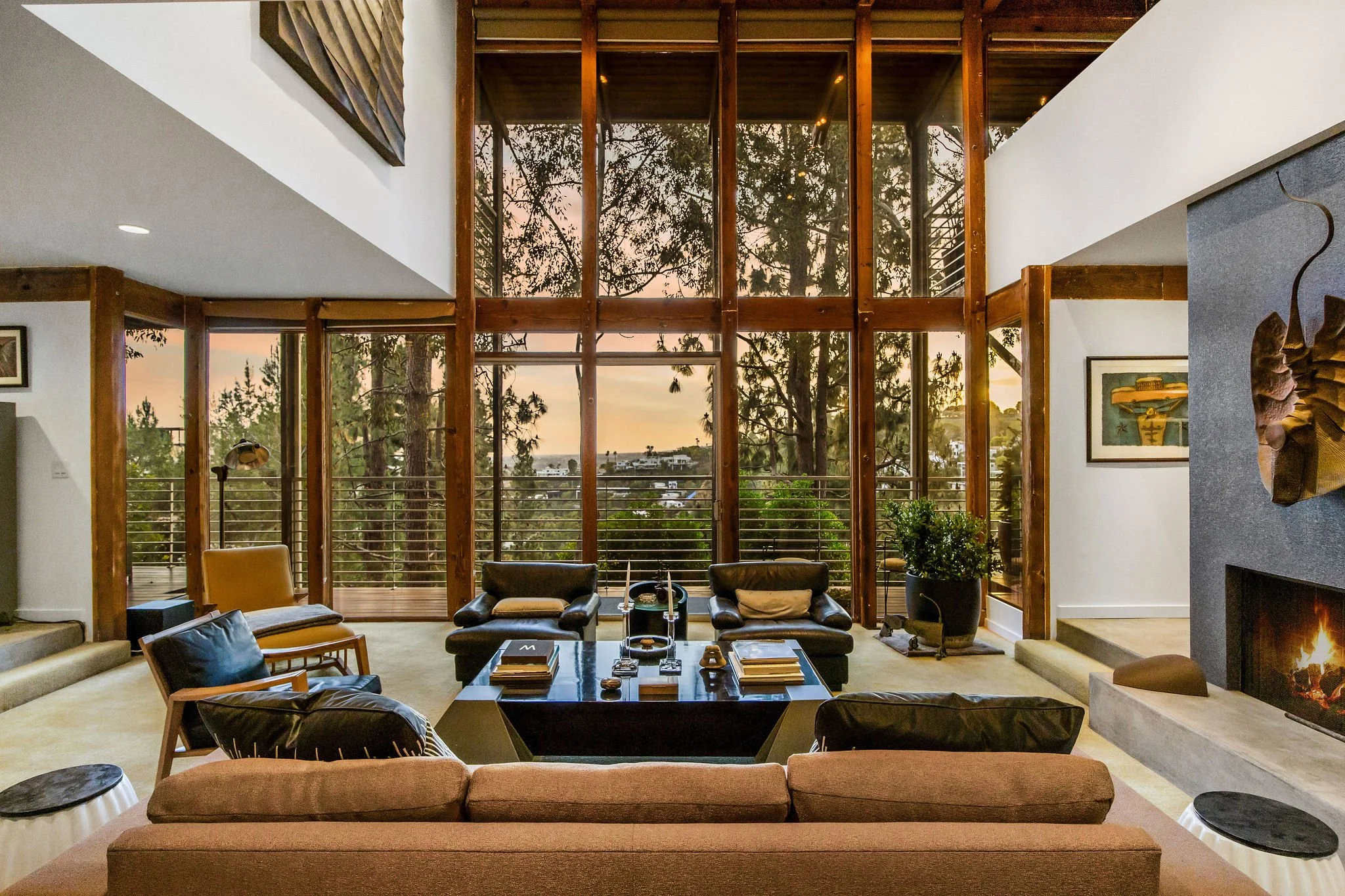
What Does a Typical South Bay Home Buyer Look Like Today?


What Does a Typical South Bay Home Buyer Look Like Today?
How buyers—and sellers—have changed across Palos Verdes, Manhattan Beach, Hermosa Beach, Redondo Beach, Torrance and the South Bay over the past decade.
There has always been a premium to live in the South Bay. But the financial profile of the household able to purchase here has changed considerably.
A decade ago, a successful professional household could still reasonably aspire to buy into many neighborhoods with conventional financing and strong income. As prices appreciated, that increasingly became a two-income equation. Today, in some of the South Bay's most expensive neighborhoods, income alone may no longer explain who can actually afford to buy.
Equity from another home, unusually large down payments, family assistance, investment assets, business wealth and generational wealth have become increasingly important parts of the conversation. At the same time, longtime homeowners on the other side of these transactions often have enormous equity and very low mortgage rates—giving them little financial incentive to sell.
The result is one of the more interesting housing dynamics I have seen in the South Bay: the buyer pool is changing at the same time that the existing homeowner population has become increasingly difficult to dislodge.
From Income-Driven Buying to Wealth-Assisted Buying
One of the biggest changes in South Bay real estate is that the ability to purchase a home has become increasingly disconnected from salary alone.
Strong Single Income
In more South Bay neighborhoods, one successful professional income could historically support a home purchase.
Dual Income
As prices accelerated, two professional incomes increasingly became necessary to qualify and comfortably carry the home.
Income + Equity
Move-up buyers increasingly arrive with substantial equity accumulated in another property, reducing the amount they need to finance.
Income + Wealth
At higher price points, family assistance, investments, business liquidity, stock compensation and generational wealth can become part of the buying equation.
The change is not simply that South Bay buyers earn more money. The bigger change is that many successful buyers arrive with more capital. Income still matters, but increasingly it is income plus equity, savings, investments or family resources that makes the purchase work.
That distinction matters for both buyers and sellers. A household can have an excellent income and still struggle to compete with another household bringing years of accumulated real estate equity—or a significantly larger cash position—to the transaction.
Mortgage rates amplify the difference. As of late August 2026, the national average 30-year fixed mortgage rate was approximately 6.66%, according to Freddie Mac. Compared with the unusually low rates available several years ago, financing the same purchase price now creates a dramatically different monthly payment.
What Does the Typical South Bay Buyer Look Like Now?
There really is no single South Bay buyer. A $1.2 million buyer in Torrance and a $6 million buyer in Manhattan Beach are participating in completely different financial markets.
But several patterns have become much more common across the region.
The Equity-Rich Move-Up Buyer
They may be moving from Torrance to Redondo Beach, Redondo to Palos Verdes, or from a smaller South Bay home into a larger long-term property. Their previous home's appreciation supplies much of the new down payment.
The High-Earning Dual-Income Family
Two established professional incomes remain an important part of the buyer pool, particularly in Torrance, Redondo Beach and selected parts of the Peninsula and Beach Cities.
The Wealth-Assisted Buyer
At higher price points, the purchase may involve family gifts, inherited assets, trust distributions, business liquidity, securities or other wealth that does not appear simply by looking at annual household income.
The Cash-Heavy Buyer
Higher mortgage rates increase the competitive advantage of buyers who can make very large down payments or purchase entirely with cash.
The Older Lifestyle Buyer
Some buyers entering Palos Verdes and the Beach Cities today are established buyers in their 40s, 50s, 60s or beyond who have spent decades accumulating equity and assets before making the move.
The Value-Seeking South Bay Family
Buyers who cannot—or do not want to—stretch into the most expensive coastal communities often expand into Torrance, Redondo Beach, San Pedro and other areas where their budget can purchase more home.
How the South Bay Buyer Changes City by City
The South Bay should never be treated as one housing market. Geography, schools, housing stock, lot size, commute, walkability, lifestyle and price point create very different buyer pools—even between communities separated by only a few miles.
For a broader geographic overview, explore our South Bay Neighborhoods & Communities Guide and interactive lifestyle maps.
| Area | Typical Buyer Profile Today | Major Financial Driver | What Has Changed |
|---|---|---|---|
| Palos Verdes Estates | Established families, move-up buyers, affluent professionals and equity-rich households | Income + substantial equity/wealth | Harder for younger income-only households to enter |
| Rolling Hills | High-net-worth estate buyer | Significant liquidity and accumulated wealth | Always exclusive; rising values further increase the capital requirement |
| Rolling Hills Estates | Families, Peninsula move-up buyers and established professionals | Dual income + equity | Strong demand for usable lots, single-level homes and convenient Peninsula locations |
| Rancho Palos Verdes | Broad mix of families, professionals, established homeowners and downsizers | Income + equity | Still offers a wider range of Peninsula entry points |
| Manhattan Beach | Executives, entrepreneurs, finance/technology professionals and high-net-worth families | High income + substantial capital | Increasingly difficult to buy premium homes on earned income alone |
| Hermosa Beach | Affluent professionals, coastal lifestyle buyers and move-up households | High income + equity | Scarcity and land values have raised the financial entry point substantially |
| Redondo Beach | Dual-income families, professionals, move-up buyers and first-time luxury buyers | Dual income + savings/equity | Increasingly serves as both a destination and an alternative to higher-priced neighboring markets |
| Torrance | Dual-income families, first-time buyers and long-term South Bay residents | Employment income remains comparatively important | Demand has risen as buyers search for relative affordability within the South Bay |
Palos Verdes: Perhaps the Clearest Example of the Shift
The Buyer Has Become More Capitalized
Palos Verdes Estates is one of the clearest examples of how affordability has changed. Census data for 2020–2024 puts median household income in Palos Verdes Estates at roughly $242,000—a very high household income by almost any standard.
Yet today's home values can still make the mathematics challenging for a household attempting to purchase primarily through salary and conventional financing.
That is why the buyer I increasingly encounter is not simply a high earner. They may also be selling another appreciated home, receiving help from family, bringing investment assets to the transaction, or making a substantially larger down payment.
This can also change the age profile of the competitive buyer. Families still want to move to Palos Verdes for schools, community, space and long-term lifestyle, but an established buyer in their 40s, 50s or 60s may have a financial advantage over a younger family trying to make its first major move-up purchase.
Established Wealth Has Always Been Part of the Market
Rolling Hills is different because it has long operated as an estate market. Large lots, privacy, acreage, equestrian properties and limited inventory have historically required substantial financial resources.
What has changed is the amount of capital required. As South Bay luxury values increased, the threshold separating a very successful income earner from a buyer able to comfortably acquire a major estate became wider.
The competitive buyer here is often evaluating the property as a long-term lifestyle asset rather than simply calculating whether monthly salary supports the mortgage.
A Bridge Between Family Housing and the Luxury Peninsula Market
Rolling Hills Estates continues to attract families seeking larger lots, schools, trails, equestrian character and convenient access to Peninsula Center and surrounding communities.
Census estimates show median household income around $192,000 for 2020–2024, yet buyers still frequently need meaningful equity or significant savings in addition to strong household earnings.
Certain neighborhoods—particularly those with flat lots, single-level homes, quiet streets and convenient access—can attract especially strong competition because the supply of those properties is naturally limited.
The Peninsula's Broadest Buyer Spectrum
Rancho Palos Verdes covers a much larger geographic area and offers a broader variety of housing than Palos Verdes Estates or Rolling Hills. That creates more entry points and a more diverse buyer pool.
Census data shows a 2020–2024 median household income of roughly $180,000 and an owner-occupancy rate above 80%. More than one-quarter of residents are also age 65 or older.
Those numbers help illustrate two forces operating simultaneously: strong household resources among buyers and a large established homeowner population that may have owned for many years.
For buyers, RPV can offer relative value compared with some neighboring Peninsula communities. For sellers, location within RPV matters enormously because views, topography, school access, street quality, neighborhood identity and convenience can dramatically influence the buyer pool.
When I first moved into the Palos Verdes community, it was easier to imagine a younger professional family stretching into the neighborhood primarily on earnings. That buyer still exists, but the hurdle is considerably higher. Today I see much more equity, larger down payments and family wealth entering the equation.
Manhattan Beach, Hermosa Beach and Redondo Beach
High Income Is Often Only the Starting Point
Manhattan Beach has evolved into one of Southern California's premier luxury residential markets. Buyers include executives, entrepreneurs, finance and technology professionals, business owners, professional athletes and families arriving with substantial existing wealth or equity.
At the higher end of the market, annual income alone becomes an incomplete way to describe purchasing power. Liquidity, stock compensation, business ownership, existing real estate and family capital can all influence what a buyer can comfortably purchase.
The result is that a household that would be considered extremely affluent almost anywhere else in the country can still find itself making compromises on lot size, location or condition in Manhattan Beach.
Scarcity Magnifies the Wealth Effect
Hermosa Beach has very limited land and relatively little housing inventory. Buyers are purchasing not only the structure but proximity to the beach, walkability and an exceptionally scarce coastal lifestyle.
As land values have increased, the buyer pool has become increasingly affluent. Younger professionals remain part of the market, particularly in attached housing and smaller properties, while single-family buyers frequently arrive with strong incomes plus equity from another property.
One of the Most Important Move-Up Markets
Redondo Beach sits in an interesting middle position. It offers coastal living and highly desirable residential neighborhoods while still providing a wider range of housing types and price points than Manhattan Beach.
That makes Redondo particularly important for dual-income professional families and buyers moving up from condos, townhomes or properties elsewhere in Los Angeles.
South Redondo, the Avenues, North Redondo and the neighborhoods closer to the Hollywood Riviera can attract meaningfully different buyer profiles, which is why city-level statistics alone rarely tell the entire story.
Manhattan Beach and Hermosa Beach increasingly behave like wealth markets as much as income markets. Redondo Beach still provides more pathways for a high-earning dual-income household, although that path has become considerably more expensive over the past decade.
Torrance: Why Dual-Income Families Continue to Compete Here
Torrance may be one of the most important markets for understanding what has happened across the South Bay.
As buyers have been priced out of Manhattan Beach, Hermosa Beach, parts of Redondo Beach and many Palos Verdes neighborhoods, Torrance has absorbed additional demand.
That does not mean Torrance is inexpensive. It means it remains comparatively accessible.
A strong dual-income household can still find more realistic paths to homeownership in West Torrance, South Torrance, North Torrance and other neighborhoods than in many nearby coastal luxury markets. Buyers also value schools, parks, employment centers, restaurants, shopping and access throughout the South Bay.
That relative affordability is itself a value driver. When buyers cannot make the numbers work five miles west or south, they do not necessarily leave the South Bay. They redraw their search.
More demand chasing Torrance's traditional single-family neighborhoods has contributed to significant long-term appreciation and gradually raised the financial barrier there as well.
Torrance still operates more like an income-driven housing market than the highest-priced areas of Manhattan Beach or Palos Verdes. That is precisely why demand has been so resilient. It remains one of the places where a successful dual-income family can more realistically compete for a traditional South Bay home.
The South Bay Seller Has Changed Too
Buyer affordability gets most of the attention, but the evolution of the South Bay seller may be equally important.
Many homeowners who purchased years or decades ago are sitting on substantial appreciation. Some have very small mortgages. Some own their homes outright. Others refinanced when mortgage rates were historically low.
Those are financially attractive positions to be in—but they can also make moving surprisingly difficult.
The Mortgage Rate Lock-In
A homeowner with a very low fixed mortgage may want another home but hesitate to exchange that financing for a new mortgage at today's higher rates.
Capital Gains
Longtime owners may have enormous unrealized gains. Depending on basis, improvements, exemptions and individual circumstances, taxes can become an important part of the decision to sell.
Where Do I Go?
Selling a valuable South Bay home is one thing. Finding a replacement property that meaningfully improves the homeowner's lifestyle and finances is another.
Aging in Place
Many longtime South Bay homeowners simply choose to remain where they are, particularly when their home is paid off, their property taxes are comparatively favorable and their community relationships are deeply established.
None of this is inherently negative for the homeowner. In fact, it is often the result of tremendous financial success: decades of appreciation, accumulated equity and relatively low housing costs.
But when thousands of homeowners independently arrive at the same conclusion—"Why would I sell?"—the collective result is fewer homes coming to market.
Why This Puts So Much Pressure on South Bay Inventory
The South Bay is already constrained geographically. The Pacific Ocean limits development to the west. Palos Verdes has limited buildable land. The Beach Cities are largely built out. Many Torrance neighborhoods are mature and established.
We cannot simply create thousands of new single-family lots in Valmonte, Manhattan Beach, Hermosa Beach or South Redondo when demand increases.
Add rate lock-in, long-term ownership, capital-gains considerations and aging in place, and the number of existing homes that actually become available can remain remarkably small relative to the number of households that would like to own them.
Scarcity Has Two Sides
For buyers: the right home may not appear simply because you are ready to purchase.
For sellers: a property that matches a scarce buyer need may have more strategic value than broad market statistics suggest.
For homeowners considering a move: the solution may require coordinating the sale and replacement purchase rather than treating them as two unrelated transactions.
This is also why private and pre-market conversations have become more important. Some homeowners are willing to consider selling but are not ready to formally list their property.
What This Means if You Are Buying in the South Bay
Understanding who you are competing against is almost as important as understanding the property.
Prepare Before the House Appears
Financing, underwriting, down-payment strategy and decision-making should ideally be resolved before the right property becomes available.
Compare Communities, Not Just Homes
Moving the search by only a few miles can materially change price, lot size, schools, commute, lifestyle and the strength of the competing buyer pool.
Think Beyond the MLS
In low-turnover neighborhoods, waiting for the perfect home to appear online can unnecessarily restrict the search. Private outreach and agent relationships can matter.
Understand Your Competitive Advantage
Cash is useful, but certainty matters too. Strong underwriting, realistic contingencies, flexibility and clean execution can help financed buyers compete effectively.
You do not necessarily need to be the wealthiest buyer. You need to understand the market you are entering, know where you can compete effectively and be unusually prepared when the right opportunity appears.
What This Means if You Own a South Bay Home
For sellers, the changing buyer profile creates an important opportunity—but it also changes how a home should be positioned.
The highest-value buyer for your home may not be the person with the highest annual income. It may be a buyer relocating with substantial equity, a family receiving assistance, an all-cash household, a nearby homeowner moving up, or someone specifically waiting for your street, lot, floor plan or school area.
This is why pricing from broad averages alone can be misleading. In neighborhoods with limited turnover, understanding the active buyer pool is critical.
Know the Buyer
Identify who is most likely to value the specific characteristics of your property.
Know the Scarcity
A flat lot, single-level layout, quiet street, view, walkability or particular school location may dramatically affect demand.
Know Your Next Move
Before selling, model taxes, replacement housing, financing and timing so that a successful sale actually improves your position.
Longtime South Bay homeowners are often in an enviable position. Significant appreciation can create enormous flexibility. The important question is not simply, "What is my home worth?"
The better question is, "What could this equity allow me to do next?"
What Could Change the South Bay Buyer Profile Again?
Interest rates are the most obvious variable. Lower mortgage rates would improve monthly affordability and could bring more financed buyers back into competition.
But lower rates could affect supply as well. Some homeowners currently unwilling to trade a low-rate mortgage for a much higher one may finally become comfortable moving.
The complication is that more affordable financing can stimulate demand at the same time. In supply-constrained South Bay neighborhoods, stronger purchasing power can ultimately flow back into prices.
That is why I do not expect the affordability story to be solved by interest rates alone.
The longer-term issue is structural: the South Bay remains highly desirable, geographically constrained and largely built out. If demand for the lifestyle continues while the supply of single-family homes remains limited, accumulated wealth and equity are likely to remain important components of the buyer profile.
Ten years ago, the question was often, "How much income do I need to buy this house?" Today the better question is, "What combination of income, equity and capital does it take to compete for this house?" That is a meaningful change—and it helps explain both the buyer and seller behavior we see throughout the South Bay today.
Related South Bay Real Estate Guides
Explore South Bay Communities
Compare Palos Verdes, the Beach Cities, Torrance, Hollywood Riviera and surrounding neighborhoods.
Explore South Bay Neighborhoods & Communities →Valmonte Real Estate
Homes, streets, lifestyle, market dynamics and local guidance for Valmonte in Palos Verdes Estates.
Explore the Valmonte Guide →Valmonte vs. Silver Spur
Compare two popular Palos Verdes family neighborhoods, including housing, streets, convenience and buyer considerations.
Compare Valmonte and Silver Spur →Hollywood Riviera
Explore coastal lifestyle, views, housing and buyer and seller considerations in the Hollywood Riviera.
Explore Hollywood Riviera →Torrance Real Estate
Understand Torrance neighborhoods, housing choices, schools, lifestyle and long-term value.
Explore Torrance →Redondo Beach Real Estate
Explore North Redondo, South Redondo, local neighborhoods, lifestyle and market considerations.
Explore Redondo Beach →Buying in the South Bay
See real buyer stories and how different strategies are used to find and secure South Bay homes.
See How We Help Buyers →Private & Off-Market Opportunities
Learn how qualified buyers and homeowners can connect before a property reaches the public market.
Explore Off-Market Homes →South Bay Buyer & Seller FAQs
What does a typical South Bay home buyer look like today?
It depends heavily on the city and price point. Across higher-priced South Bay markets, today's competitive buyer is often a dual-income professional household, an equity-rich move-up buyer, an established older buyer, or a household combining strong income with investments, family assistance or other accumulated wealth.
Has it become harder for younger families to buy in Palos Verdes?
In many cases, yes. Home-price appreciation and higher financing costs have increased the amount of income and capital required. Younger families still purchase throughout Palos Verdes, but large down payments, equity from a previous property or family assistance can materially improve affordability and competitiveness.
Why are there more cash and large-down-payment buyers?
Higher mortgage rates make borrowing more expensive, increasing the advantage of buyers who can reduce or eliminate financing. Many South Bay buyers also arrive with substantial equity from another appreciated California property.
Why don't more longtime South Bay homeowners sell?
Several factors can discourage moving: low existing mortgage rates, accumulated equity, potential tax considerations, difficulty finding a replacement property and a desire to age in place. When homeowners are financially comfortable where they are, there may be little urgency to move.
Why is South Bay housing inventory often limited?
Much of the South Bay is geographically constrained and already developed. Limited new single-family construction combines with long ownership periods, mortgage-rate lock-in and strong homeowner equity to reduce turnover in many neighborhoods.
Is Torrance still more affordable than the Beach Cities and Palos Verdes?
Generally, Torrance offers more attainable price points than the highest-priced portions of Manhattan Beach, Hermosa Beach and Palos Verdes, although values vary substantially by neighborhood. This relative affordability is one reason Torrance continues to attract strong demand from dual-income families and buyers who want to remain in the South Bay.
Does a seller need to list publicly to find out whether buyers are interested?
Not necessarily. In some situations, a homeowner can privately explore whether qualified buyers exist before deciding whether to prepare and publicly market the home. The appropriate strategy depends on the seller's goals, timing, privacy requirements and desire for maximum market exposure.
How should a South Bay homeowner determine what their home is worth?
Recent comparable sales are the starting point, but they are not the entire analysis. Street location, lot usability, views, condition, floor plan, schools, privacy, inventory and the specific buyers currently searching for that type of property can all influence value.
Thinking About Buying, Selling or Simply Understanding Your Options?
Whether you are trying to understand where your budget fits in today's South Bay market or you have owned your home for decades and want to know what your equity could allow you to do next, I am happy to have a private conversation and help you think through the numbers, neighborhoods and strategy.
Talk With Cliff Explore South Bay NeighborhoodsData & methodology note: This article combines Scherb Homes Group's firsthand observations from active South Bay buyers, sellers and transactions with public housing, demographic and mortgage-market information. Buyer profiles describe market patterns rather than requirements or assumptions about any individual buyer. Public reference data includes U.S. Census Bureau 2020–2024 American Community Survey/QuickFacts estimates and Freddie Mac's Primary Mortgage Market Survey. Local market conditions change continuously; see our current market reports for the latest city-by-city pricing and inventory data.
Public sources: U.S. Census Bureau QuickFacts • Freddie Mac Primary Mortgage Market Survey • Scherb Homes Group South Bay Market Reports