Palos Verdes Microclimates: A Local Guide for Home Buyers and Sellers

Cliff’s Notes | Palos Verdes Peninsula Living
Palos Verdes Microclimates: Why the Weather Can Change From One Neighborhood to the Next
A local guide to how elevation, ocean exposure, fog, wind, slope direction and topography shape daily life across Palos Verdes Estates, Rolling Hills Estates, Rolling Hills and Rancho Palos Verdes.
The Palos Verdes Peninsula is not one uniform climate. A home near the coast may be cool and foggy while another property only a few miles away is sunny, warm and nearly windless. Understanding these differences can help buyers choose the right neighborhood, help sellers explain a home’s lifestyle advantages and help homeowners make smarter decisions about air conditioning, outdoor space, landscaping and long-term comfort.
The Big Picture
One Peninsula, Many Different Climates
Palos Verdes rises sharply from the coast and includes oceanfront bluffs, wooded valleys, exposed ridgelines, interior basins and slopes facing several different directions. Those physical features create noticeable changes in temperature, sunlight, wind and fog over surprisingly short distances.
You can live close to the coast, near the top of the hill, on the north side facing the Los Angeles basin, on the south side looking toward Catalina Island or in a protected interior pocket. Each location can have a completely different feel.
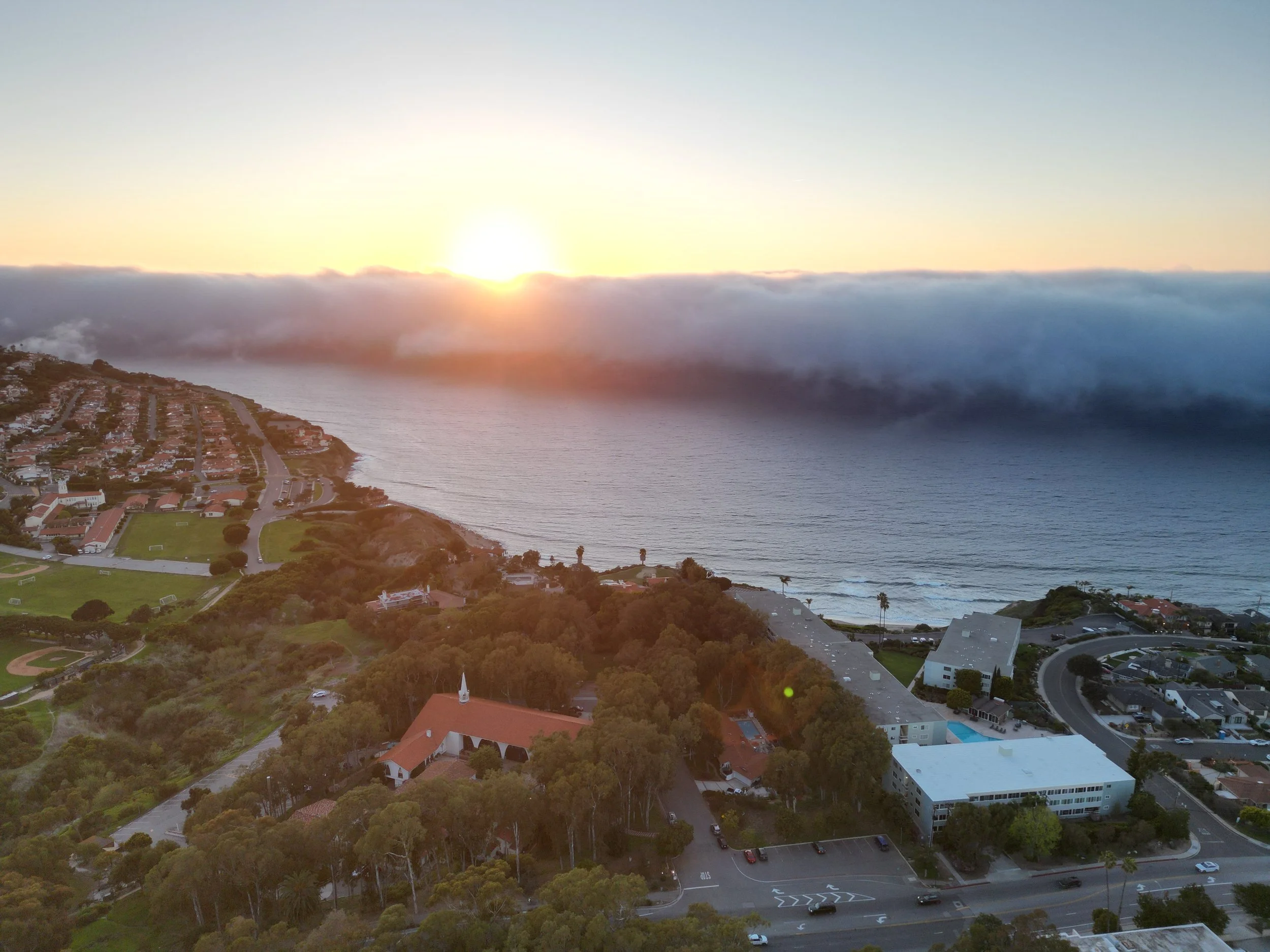
On the same day, lower coastal neighborhoods may be covered by marine-layer fog while Silver Spur, Peninsula Center or another elevated neighborhood is sunny. A house near Malaga Cove may be in the upper 60s while Peninsula Center is around 80 degrees. Even within a single neighborhood such as Valmonte, temperatures can change by several degrees as you travel east or move farther from the ocean.
Cliff’s Notes Take
In Palos Verdes, a few miles of distance—or even a change in elevation, slope direction or exposure—can make a meaningful difference in how a home feels throughout the year.
That is why buyers should evaluate more than a city name or ZIP code. The specific street, elevation, side of the hill, surrounding trees and relationship to the ocean can be just as important as the house itself.
At a Glance
Palos Verdes Microclimate Quick Facts
Neighborhoods closer to the western and southern coastline generally receive more marine influence, cooler breezes and more May Gray or June Gloom.
Protected interior areas and lower north-facing slopes can trap heat and may feel considerably warmer than neighborhoods near the ocean.
Marine-layer fog may remain in lower areas while neighborhoods at higher elevations enjoy sunshine above the cloud layer.
A slope’s direction can affect sunlight, afternoon heat, wind exposure and even how early the sun disappears behind the hill.
Why It Happens
What Creates Palos Verdes’ Microclimates?
The Peninsula’s climate differences are created by several overlapping geographic and environmental factors.
Distance From the Ocean
The closer a neighborhood is to the open water, the more likely it is to experience cool air, stronger coastal breezes, morning clouds and fog.
Elevation
Higher neighborhoods may sit above a low marine layer and remain sunny even when lower coastal neighborhoods are completely fogged in.
Slope Direction
North-, south-, east- and west-facing slopes receive sunlight and wind differently. Orientation can change afternoon warmth and seasonal sunset timing.
Topographic Protection
Hills, ridgelines and valleys can block wind, contain heat or create protected pockets with significantly different conditions from nearby streets.
Trees and Open Space
Wooded neighborhoods and areas with substantial open space often feel cooler because of shade, vegetation and less heat-retaining development.
Fog Movement
Fog does not cover the entire Peninsula evenly. It may gather along the coast, settle in low areas or wrap around one side of the hill while another side remains clear.
Local Climate Tour
A Clockwise Tour Around the Palos Verdes Peninsula
The easiest way to understand these differences is to move clockwise around the hill, beginning near Valmonte and continuing through Rolling Hills Estates, Rolling Hills, Rancho Palos Verdes and Palos Verdes Estates.
Cooler Near the Western Edge, Warmer Toward the East
The westernmost part of Valmonte is close to the coast, heavily influenced by trees and often noticeably cool. During May Gray and June Gloom, this part of the neighborhood can feel cold compared with other areas of the Peninsula.
As you travel east through Valmonte, conditions can become progressively warmer. Even along routes such as Via La Selva, the temperature can change by five or more degrees over a relatively short distance.
Warmer Slopes, Sunny Pockets and Protected Interior Areas
As Valmonte transitions toward Rolling Hills Estates, the weather generally becomes warmer and sunnier. Lower areas near the valley side and Walteria can become quite warm in summer because they sit farther from the direct ocean influence.
These neighborhoods may have less wind and can be more likely to benefit from air conditioning. The area also offers extensive trails, equestrian paths and open spaces that create a different outdoor lifestyle from the coastal side of the hill.
Sunny, Elevated and Sometimes Surprisingly Warm
Silver Spur and surrounding higher-elevation neighborhoods may sit above lower coastal fog. It is entirely possible for Valmonte or Malaga Cove to be gray while Silver Spur is sunny.
Peninsula Center sits in a relatively protected top-of-the-hill basin surrounded by higher terrain. At times, wind can be limited and heat can build, making this area warmer than many buyers expect from a hilltop location.
Dry Ridgelines With Major Differences by Exposure
Rolling Hills is especially dynamic because it occupies elevated terrain with slopes facing different directions. The north-facing side can feel warmer, drier and more influenced by heat rising from the basin below.
The southern side may benefit from coastal breezes, cooler temperatures and greater ocean influence. Some properties experience wind and panoramic views toward the harbor, Catalina Island, downtown Los Angeles or the Queen’s Necklace.
Warmer, Drier and Earlier Seasonal Sunsets
Palos Verdes Drive East generally feels warmer because much of it is farther from the open ocean and less exposed to direct marine air. The landscape can be drier, although many properties still enjoy impressive city, harbor or coastline views.
One unusual feature is that the sun may disappear behind the hill earlier in the afternoon during certain seasons, even while the western side of the Peninsula remains brightly lit. Winter evenings can therefore feel cooler sooner than expected.
Big Views With More Ocean Influence
Mira Catalina combines broad coastal and harbor views with somewhat greater exposure to ocean breezes than areas farther inland. Conditions can still become warm, but the marine influence is more noticeable.
Coastal, Scenic and More Exposed to Fog
The area near Trump National Golf Club, Terranea and Palos Verdes Drive South is highly coastal. It can become warm on clear days, but it is strongly affected by ocean air, wind and fog.
Homes here may enjoy dramatic ocean and Catalina views while also experiencing cooler evenings and more frequent marine-layer conditions.
Cool Breezes and Direct Coastal Exposure
West-facing portions of Rancho Palos Verdes tend to feel cooler and breezier because of their proximity to the ocean. These areas may experience fog and marine air but also offer some of the Peninsula’s most dramatic coastal scenery.
Elevated Views With Periodic Wind
La Cresta sits high on the Peninsula and can offer expansive views. Some locations are windy because of their elevation, while others are surprisingly protected depending on the street and surrounding topography.
Cool, Coastal and Frequently Foggy Near the Bluffs
Lower Lunada Bay and Margate are among the cooler parts of the Peninsula. These neighborhoods are strongly influenced by the ocean and can be fully covered by fog during May Gray and June Gloom.
Upper Lunada Bay is also generally cool and green. Fog can reach well uphill into streets around Via Coronel, Espinosa Circle and Via Olivera, depending on the marine layer.
Classic Coastal Weather
Malaga Cove receives consistent ocean breezes and can be cool, cloudy or foggy during parts of spring and early summer. Many homes do not require air conditioning as often as properties in warmer interior neighborhoods.
Green, Elevated and Cooler on the Western Side
Montemalaga is elevated and often breezy, with significant variation between its western and eastern edges. The western side generally receives more direct ocean influence and tends to be cooler.
The eastern side remains temperate but is usually a little warmer because it sits farther from the coast. The neighborhood’s mature trees and open spaces help keep the overall environment cooler and greener.
One of the Peninsula’s Warmest Areas
Eastview is generally hotter, calmer and more inland in feel. The hill can block some of the cooling coastal wind, allowing heat to build more easily.
Buyers who prefer reliable sunshine and warmer afternoons may appreciate Eastview, while buyers who dislike heat should carefully evaluate exposure and air-conditioning needs.
Highly Variable, Windy and Topographically Complex
The Portuguese Bend area can feel hot, cool or windy depending on the season, elevation and precise location. Exposed upper areas can become very warm during summer and may experience significant wind.
Lower portions with more trees can feel shaded and cooler. The area’s open-space setting and complex terrain create one of the Peninsula’s most distinctive local climates.
Cliff’s Notes Take
The most important lesson is that city boundaries do not define climate. Street location, elevation, nearby ridgelines and ocean exposure often matter more than whether a property is technically in Palos Verdes Estates, Rolling Hills Estates or Rancho Palos Verdes.
Cooler Lifestyle
Where Are the Cooler Parts of Palos Verdes?
Buyers who prefer cool evenings, ocean air and less dependence on air conditioning will usually gravitate toward neighborhoods with stronger coastal exposure.
Often Cooler
- Malaga Cove
- Lower Lunada Bay
- Margate
- Western Montemalaga
- Western Valmonte
- West Rancho Palos Verdes
- Palos Verdes Drive South
Typical Conditions
- More marine-layer mornings
- Cooler summer evenings
- More ocean breeze
- Greater chance of fog
- Less frequent need for air conditioning
Potential Tradeoffs
- More May Gray and June Gloom
- Wind exposure on certain streets
- Salt air near the coast
- Cooler outdoor temperatures
- Less predictable morning sunshine
Warmer Lifestyle
Where Are the Warmer and Sunnier Parts of Palos Verdes?
Buyers seeking more consistent sunshine, warmer pools and patios, or fewer foggy mornings may prefer the inland and northern portions of the Peninsula.
Often Warmer
- Rolling Hills Estates
- Northern Rolling Hills
- Peninsula Center
- Palos Verdes Drive East
- Eastview
- Eastern Valmonte
Typical Conditions
- More afternoon sun
- Warmer summer temperatures
- Less direct marine influence
- Lower wind in protected areas
- Greater air-conditioning value
Potential Tradeoffs
- Hotter upstairs bedrooms
- Warmer west-facing yards
- Greater cooling costs
- Drier landscaping conditions
- Less immediate coastal feel
Side-by-Side Guide
Palos Verdes Neighborhood Climate Comparison
| Area | General Climate | Common Characteristics | What Buyers Should Check |
|---|---|---|---|
| Western Valmonte | Cooler | Wooded, coastal influence, fog | Morning sun, shade and winter dampness |
| Eastern Valmonte | Warmer | More sun, less direct ocean influence | Afternoon heat and cooling needs |
| Rolling Hills Estates | Warm to hot | Protected slopes, trails, lower wind | A/C, yard exposure and pool temperature |
| Silver Spur | Sunny and moderate | May sit above fog, elevated | Wind, sun exposure and street elevation |
| Peninsula Center | Warmer | Protected interior basin | Heat retention and afternoon sun |
| Rolling Hills | Dry and variable | Ridgelines, large views, changing exposure | Slope direction, wind and vegetation |
| Palos Verdes Drive East | Warm and dry | Less marine influence, earlier shadow | Seasonal sunlight and evening cooling |
| Eastview | Hotter | Lower wind, inland influence | A/C, west-facing glass and roof exposure |
| Palos Verdes Drive South | Cool to moderate | Ocean breeze, fog, large views | Wind, salt air and marine-layer exposure |
| Lower Lunada Bay | Cool | Fog, bluffs, direct coastal influence | Sunlight, wind and bluff proximity |
| Malaga Cove | Cool | Ocean breeze, fog, coastal air | Morning cloud cover and shade |
| Montemalaga | Cool to moderate | Green, elevated, western side cooler | Wind and east-west location |
| Portuguese Bend | Highly variable | Wind, exposed ridges, shaded lower pockets | Exact elevation, slope and seasonal conditions |
Buyer Strategy
How Buyers Should Evaluate a Palos Verdes Microclimate
A buyer should experience a neighborhood at more than one time of day whenever possible. Weather that feels ideal during a morning showing may be completely different in the late afternoon.
The Coastal-Climate Buyer
This buyer values cool air, ocean breezes, green surroundings and comfortable sleeping temperatures.
Best areas to explore: Malaga Cove, Lunada Bay, western Valmonte, western Montemalaga and coastal Rancho Palos Verdes.
The Sunshine-Seeking Buyer
This buyer prefers warmer afternoons, sunnier yards, comfortable pool weather and fewer marine-layer mornings.
Best areas to explore: Rolling Hills Estates, Eastview, Peninsula Center, Palos Verdes Drive East and northern Rolling Hills.
The View-Oriented Buyer
This buyer prioritizes panoramic scenery and may accept wind, fog or changing temperatures in exchange for a special outlook.
Best areas to explore: Rolling Hills, Mira Catalina, La Cresta, Palos Verdes Drive South and west-facing Rancho Palos Verdes.
Questions to Ask Before Buying
- How does the home feel in the morning, afternoon and evening?
- Does the yard receive direct sunlight throughout the year?
- Is the home above or below the typical marine layer?
- Does the street experience strong wind?
- Are west-facing rooms noticeably hotter?
- Does the home have air conditioning, ceiling fans or good cross-ventilation?
- Do trees provide helpful shade or create excessive dampness and debris?
- How early does the sun move behind the hill during winter?
- Is the outdoor space comfortable during the hours you are most likely to use it?
Cliff’s Notes Take
Do not judge a Palos Verdes home’s climate from a single showing. Visit at different times, stand in the yard, open the windows and pay attention to sunlight, wind and temperature inside the house.
Seller Strategy
How Sellers Can Present a Home’s Climate Advantages
A home’s microclimate can be a meaningful lifestyle feature. Sellers should explain the practical experience of living in the property, not simply describe the view or neighborhood.
Features Worth Highlighting
- Reliable ocean breezes
- Comfortable summer evenings
- Above-the-fog sunshine
- Protected outdoor entertaining areas
- Warm, sunny pool exposure
- Cooling shade from mature trees
- Energy-efficient air conditioning
- Cross-ventilation and operable windows
- Seasonal sunset or sunrise views
Details Buyers Will Notice
- Hot upstairs rooms
- Wind on balconies and patios
- Fog or moisture near the coast
- Heavy shade from mature landscaping
- Direct afternoon sun through large windows
- Outdoor areas that become unusable at certain hours
- Whether air conditioning is present
- Salt exposure on exterior materials
Sellers should be specific. Statements such as “the home stays naturally cool during summer evenings,” “the backyard is protected from the prevailing wind,” or “this elevation frequently sits above the morning marine layer” are more useful than generic descriptions.
The most effective marketing connects the property’s climate to daily life: sleeping with the windows open, enjoying a sunny breakfast patio, swimming later in the afternoon or entertaining outdoors without strong coastal wind.
Coastal Proximity
Microclimate Is Not the Same as Beach Access
A neighborhood may feel coastal without having direct or convenient access to the sand. Palos Verdes has high bluffs, steep terrain and limited shoreline access in many locations.
Closer to Torrance Beach and RAT Beach
Valmonte, Malaga Cove, portions of Rolling Hills Estates, Silver Spur and parts of Lunada Bay are relatively convenient to Torrance Beach and RAT Beach by car.
Southern Peninsula Coastal Access
Palos Verdes Drive South provides access to coastal destinations around Portuguese Bend, Terranea and the shoreline toward San Pedro and White Point.
Lunada Bay is highly coastal but sits above substantial bluffs, so reaching the shoreline is not always simple. By contrast, some neighborhoods farther from the visible ocean may have easier driving access to a usable beach.
From most parts of the Peninsula, the drive to a beach is generally manageable, but traffic, topography and the specific route can make the experience very different from one neighborhood to another.
A Simple Way to Remember It
The Palos Verdes “C” Rule
Cliff’s Notes Take
Imagine drawing a large letter “C” around the western and southern coastal edge of the Peninsula. That broad coastal band is generally cooler, breezier and more influenced by fog. The interior and northern side are generally warmer, sunnier and drier.
This is not an absolute rule. Elevation, trees, valleys, wind exposure and the precise orientation of a property can create exceptions. However, it is a useful starting point for understanding the Peninsula.
The cooler coastal “C” also overlaps with many of the Peninsula’s most scenic and historically desirable residential areas. Coastal views, established neighborhoods and proximity to the ocean often contribute to higher real estate values, although condition, lot, school access, street quality and individual property characteristics remain equally important.
The best neighborhood is not necessarily the coolest, warmest or most expensive. It is the one whose climate matches how you want to live.
Important Takeaways
What to Remember About Palos Verdes Weather
Microclimates Can Affect Value
Consistent ocean breezes, sunlight, protected outdoor areas and comfortable temperatures can influence buyer preferences and perceived value.
Comfort Is Personal
Some buyers love fog and cool air. Others want heat and sun. The right climate depends on the household and how the property will be used.
The Street Matters
Two homes in the same neighborhood can feel different because of slope, elevation, vegetation, orientation and wind protection.
Frequently Asked Questions
Palos Verdes Microclimate FAQ
Which part of Palos Verdes has the coolest weather?
Malaga Cove, lower Lunada Bay, Margate, western Valmonte, western Montemalaga and coastal portions of Rancho Palos Verdes are generally among the coolest areas because they receive more direct ocean influence, fog and coastal breeze.
Which areas of Palos Verdes are usually the warmest?
Eastview, portions of Rolling Hills Estates, Peninsula Center, Palos Verdes Drive East and the northern side of Rolling Hills tend to be warmer because they are farther from direct ocean air or are protected by the hill.
Can it really be sunny on one side of the Peninsula and foggy on the other?
Yes. Marine-layer fog may remain along the western coastline or in low-lying areas while elevated or inland neighborhoods are sunny. The top of the Peninsula can also sit above the fog layer.
Do homes in Palos Verdes need air conditioning?
It depends heavily on location, exposure and the house itself. Coastal neighborhoods may need air conditioning less frequently, while warmer interior areas, west-facing homes and properties with limited cross-ventilation may benefit from it considerably.
Is Palos Verdes Estates cooler than Rolling Hills Estates?
In general, much of Palos Verdes Estates is cooler because it is closer to the western coastline and contains substantial trees and open space. Rolling Hills Estates often feels warmer, particularly in lower or more protected inland areas. Individual streets can still vary.
Which Palos Verdes neighborhoods get the most fog?
Lower Lunada Bay, Margate, Malaga Cove, western Valmonte and coastal Rancho Palos Verdes commonly experience more marine-layer fog. Fog intensity changes with season, elevation and daily weather patterns.
Which areas are best for buyers who want more sunshine?
Buyers seeking warmer and sunnier conditions should consider Eastview, Rolling Hills Estates, Peninsula Center, Palos Verdes Drive East, eastern Valmonte and portions of northern Rolling Hills.
How should I evaluate wind before buying a Palos Verdes home?
Visit the property at different times and stand in the main outdoor areas. Ask whether the yard is protected, whether doors slam during windy conditions and whether balconies or patios remain comfortable. Ridgelines and exposed ocean-facing slopes can be significantly windier than nearby protected streets.
Does the microclimate affect landscaping?
Yes. Coastal fog, salt air, shade, heat, wind and dryness all affect plant selection, irrigation needs and maintenance. Landscaping that thrives in cool Malaga Cove may perform differently in warmer Eastview or Rolling Hills Estates.
Does a cooler coastal location always mean a higher home value?
No. Coastal exposure can support demand, especially when paired with views and a desirable neighborhood, but home value also depends on lot quality, street appeal, condition, schools, floor plan, privacy and market conditions. Some buyers strongly prefer warmer inland neighborhoods.
Choosing the Right Palos Verdes Microclimate
Finding the right home on the Peninsula means understanding more than bedrooms, square footage and views. The exact street, elevation and weather pattern can shape how you experience the property every day. Scherb Homes Group helps buyers compare these neighborhood-level differences and helps sellers explain the lifestyle advantages of their specific location.