Palos Verdes Owls Guide: Where to See Owls on the Peninsula
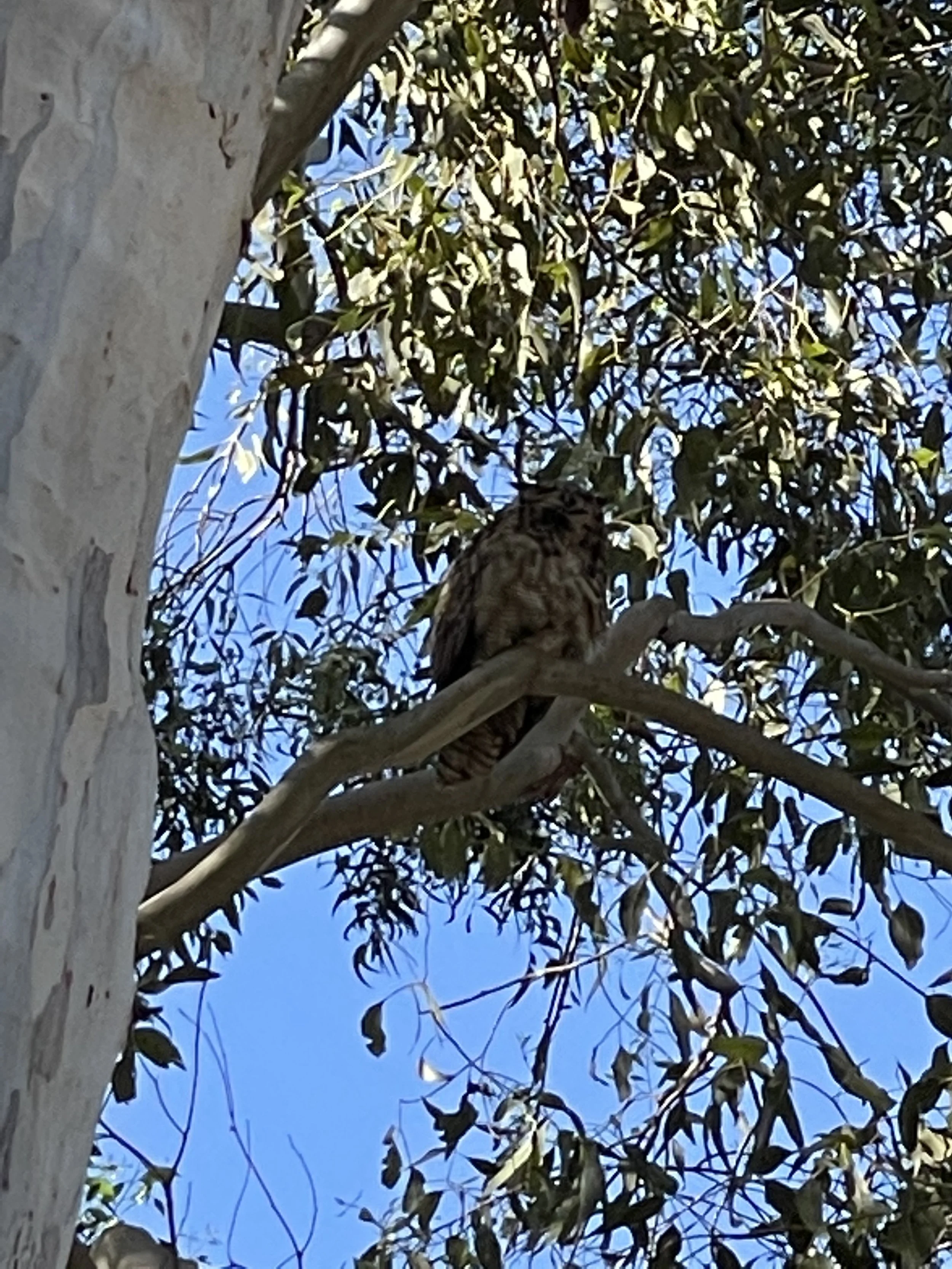

The Owls of the Palos Verdes Peninsula
A local guide to the Great Horned Owls, Barn Owls, and other nighttime neighbors that live among the eucalyptus, canyons, horse trails, open space, and residential streets of Palos Verdes.
The Palos Verdes Peninsula is known for ocean views, equestrian trails, golf clubs, canyon roads, peacocks, coastal bluffs, and quiet neighborhoods. But after dark, another part of the Peninsula comes alive: the owls.
They live here in a way that still feels almost impossible. We are surrounded by Los Angeles County, major roads, active neighborhoods, schools, restaurants, and busy daily life. Yet at night, from Valmonte to Lunada Bay, from Silver Spur to Rolling Hills Estates and behind the gates in Rolling Hills, you can still hear owls calling from tree to tree.
Quick Facts About Palos Verdes Owls
Most Likely Owl
The owl many residents hear at night is often the Great Horned Owl, the classic deep-hooting owl with large yellow eyes and feather tufts that look like horns.
Where They Like to Live
Mature eucalyptus, pine, pepper, sycamore, and canyon-edge trees; larger lots; horse properties; golf course edges; preserve boundaries; and quiet residential streets with canopy.
Best Time to Notice Them
Dusk, nighttime, and very early morning. You are usually more likely to hear them than see them.
What Kind of Owls Live on the Palos Verdes Peninsula?
The owl most commonly associated with the Peninsula’s deep nighttime calls is the Great Horned Owl. It is one of North America’s most adaptable owls and can live in open space, canyons, wooded neighborhoods, parks, golf courses, and semi-urban environments.
Barn Owls are also part of Southern California’s owl landscape and may be seen around more open areas, canyon edges, fields, equestrian zones, and larger properties where rodents are present. Western Screech-Owls may also be possible in wooded Southern California settings, especially where older trees and cavities exist, although they are much harder for most residents to detect.
Great Horned Owl
The big, powerful “hoot owl.” Strong, territorial, adaptable, and often heard before seen. This is the owl many Palos Verdes residents describe when they hear deep calls across the canyon or from tall trees at night.
Barn Owl
A pale, ghostlike owl with a heart-shaped face. Barn Owls are excellent rodent hunters and are more tied to open hunting areas, fields, canyon edges, and structures.
Western Screech-Owl
A smaller, camouflaged owl that uses tree cavities and wooded habitat. It is much less obvious than a Great Horned Owl and can be difficult to identify without experience.
Where Palos Verdes Owls Live
Owls do not think in city boundaries. They follow habitat. On the Palos Verdes Peninsula, that means mature trees, open hunting corridors, canyon edges, horse trails, preserve land, golf course borders, and quiet streets where they can perch, nest, and hunt.
They seem especially comfortable where residential neighborhoods meet natural space. That is part of what makes Palos Verdes so special: a home can feel connected to both a neighborhood and a wild landscape at the same time.
Tree Canopy and Perches
- Tall eucalyptus trees
- Pines and mature evergreens
- Sycamores and canyon trees
- Pepper trees and older ornamental trees
- Large branches with open flight paths
Hunting Habitat
- Canyon edges
- Open slopes and trails
- Equestrian properties
- Golf course boundaries
- Preserve edges and open space corridors
One of the things I love about living in Palos Verdes is that the Peninsula is not only polished landscaping and pretty streets. It is still alive. At night you can hear owls calling across Malaga Cove toward Valmonte, tree to tree, almost like the neighborhood has a second life after everyone goes inside.
Where to See or Hear Owls in Palos Verdes
The honest answer is that owls are hard to find on purpose. They are quiet, camouflaged, and mostly active when people are winding down for the night. Most residents will hear them long before they see them.
The best places to notice them are usually the quieter edges: a mature tree canopy street in Valmonte, the canyon side of Palos Verdes Estates, a larger lot in Rolling Hills Estates, a horse property near the trails, the quieter parts of Rancho Palos Verdes, or behind the gates in Rolling Hills.
Dusk
Listen from quiet streets near tree canopy, canyon edges, and open space. This is often when activity begins.
Late Evening
Calls can carry surprisingly far. In the right conditions, you may hear owls talking across canyons or from one grove of trees to another.
Early Morning
Before the neighborhood gets busy, owls may still be active or returning to daytime roosts.
For families, the search itself can become the experience. Clover and I have gone looking for them at night with a headlamp, walking the neighborhood and listening. Most nights, we do not find them. That is part of the magic. You know they are nearby, but they do not make it easy.
Seasonality: When Owls Are Most Noticeable
Owls can be present year-round, but residents may notice them more during certain times of year. Great Horned Owls often become more vocal during courtship and nesting periods, which can begin in winter and continue into spring depending on local conditions.
Spring and early summer can bring more movement around nesting areas and young owls learning the landscape. Late summer and fall may feel quieter, but the owls may still be present, simply less vocal or harder to detect.
| Season | What You Might Notice | Local Observation Tip |
|---|---|---|
| Winter | More calling, pair activity, and territorial hooting. | Listen after sunset from quiet tree-lined streets. |
| Spring | Nesting activity and more family movement in suitable habitat. | Give nests and roosting trees plenty of space. |
| Summer | Young owls may be learning to hunt and move through the area. | Watch quietly from a distance; do not use bright lights on wildlife. |
| Fall | Often quieter, but owls may still be using the same territories. | Listen for calls after warm evenings or along canyon edges. |
What Owls Are Like: Lifestyle and Habits
Owls are built for the night. Their soft-edged feathers allow quiet flight, their eyes gather light, and their hearing helps them locate prey that people would never notice. They can sit still for long stretches, then move suddenly and silently.
Great Horned Owls are powerful and confident. They often use large trees for roosting and nesting, and they may reuse old nests built by hawks, ravens, or other large birds. Barn Owls are more open-country hunters and can use cavities, structures, and sheltered spaces.
Quiet Hunters
They move with very little sound, which is why a large owl can be nearby without anyone realizing it.
Territorial Neighbors
Owls often maintain territories, especially during breeding season. Calls help them communicate and define space.
More Heard Than Seen
The deep hoot across Valmonte, Malaga Cove, Lunada Bay, or Rolling Hills Estates may be your only clue.
What Do Palos Verdes Owls Eat?
Owls are predators, and their diet is one reason they matter in a healthy local ecosystem. They eat rodents and other small animals, and larger owls may take a wider range of prey depending on availability.
Great Horned Owls can eat rodents, rabbits, small birds, reptiles, and other small animals. Barn Owls are especially known for rodent control. After digesting the soft parts of their prey, owls cough up pellets containing fur, bones, and other indigestible material.
We sometimes find owl pellets around the neighborhood. They are gross, but also fascinating. It is one of those small reminders that the Peninsula has a real food chain happening right around us, even on streets that feel completely residential during the day.
Cliff’s Personal Owl Stories
Some wildlife experiences stay with you because they feel so close to home. Literally.
The Skylight
One night, owls were looking into our bedroom skylight. It was one of those moments where you wake up and realize the wild part of Palos Verdes is not somewhere far away. It is right there on your roofline.
Footsteps on the Roof
Another time it sounded like men were walking on our roof. It was not people. It was owls. When a large owl lands or moves above you, it can sound much heavier than you would expect.
Clover and I will sometimes walk the neighborhood at night with a headlamp, listening for them and trying to spot them. Most of the time, it is hard. That is the point. Owls are not performing for us. They are living their lives quietly above us, and every sighting feels earned.
Conservation: How to Be a Good Owl Neighbor
Living near owls is a privilege. The best thing residents can do is protect the conditions that allow them to remain here: mature trees, open space, safe habitat corridors, and responsible nighttime behavior.
Protect Mature Trees
Large trees provide roosting, nesting, shade, and hunting perches. Tree canopy is part of the Peninsula’s wildlife infrastructure.
Be Careful With Rodenticides
Rodent poison can move up the food chain and harm owls, hawks, bobcats, coyotes, and other predators that naturally help control rodents.
Observe Quietly
Do not crowd nesting trees, play calls, shine bright lights, or try to lure owls closer. Listen, watch, and let them stay wild.
Neighborhoods Where Owls Are Part of the Local Character
Owls are not limited to one neighborhood, but certain parts of the Peninsula have the right mix of mature trees, canyons, open space, and quieter residential edges.
Valmonte and Malaga Cove
Valmonte’s tree canopy, canyon feel, horse trail connections, and older neighborhood pattern make it one of the Peninsula’s special wildlife corridors. The calls across Malaga Cove toward Valmonte can be unforgettable.
Lunada Bay
Lunada Bay combines coastal exposure, mature residential landscaping, canyons, and quiet streets where owls may be heard at night.
Silver Spur
Silver Spur and the surrounding Rolling Hills Estates and Rancho Palos Verdes edges offer mature landscaping, school-area neighborhoods, and nearby open space that can support owl activity.
Rolling Hills Estates and Rolling Hills
Equestrian properties, larger lots, trail systems, mature trees, and quieter nighttime conditions make these areas especially well suited for owl habitat.
Rancho Palos Verdes
Rancho Palos Verdes has some of the Peninsula’s strongest open-space connections, canyon edges, preserve areas, and coastal habitat where owls can hunt and move.
The Larger Peninsula Wildlife Story
Owls are part of a broader wildlife identity that includes peafowl, raptors, coyotes, rabbits, native birds, coastal habitat, and canyon ecosystems.
Who Values This Kind of Palos Verdes Lifestyle?
Owls are not a real estate feature in the traditional sense, but they do reveal something meaningful about a neighborhood. Areas with mature trees, quiet streets, canyon edges, equestrian trails, and open-space connections often appeal to buyers who want more than a house. They want a living environment.
Nature-Oriented Families
Families who value evening walks, wildlife, tree canopy, and outdoor discovery often connect with neighborhoods like Valmonte, Lunada Bay, Silver Spur, and Rolling Hills Estates.
Privacy and Space Buyers
Larger lots, mature landscaping, and canyon settings can create a quieter, more private daily rhythm, especially in Rolling Hills, Rolling Hills Estates, and parts of Rancho Palos Verdes.
Long-Term Peninsula Residents
Many long-term residents love the Peninsula because it still feels connected to nature despite being close to the South Bay, beach cities, and Los Angeles.
FAQ: Owls on the Palos Verdes Peninsula
What owl am I hearing at night in Palos Verdes?
Most deep, classic hooting calls are likely from a Great Horned Owl, especially in wooded residential areas, canyon edges, and neighborhoods with mature trees.
Are owls common in Valmonte?
They are present, but not always easy to see. Valmonte’s mature trees, horse trail feel, canyon proximity, and connection to Malaga Cove make it a strong area for hearing owls at night.
Where is the best place to see owls on the Peninsula?
The best approach is to listen near quiet tree canopy, canyon edges, preserve boundaries, equestrian areas, and larger lots at dusk or after dark. Do not disturb nesting or roosting owls.
Do owls live in busy city areas?
Yes. Great Horned Owls are highly adaptable and can live near residential neighborhoods, parks, golf courses, and urban edges when food, trees, and safe habitat are available.
What are owl pellets?
Owl pellets are compact masses of fur, bones, and other indigestible material that owls cough up after eating. They can look unpleasant, but they are a fascinating sign that owls are actively hunting nearby.
Should I use a flashlight or headlamp to look for owls?
Use restraint. A soft headlamp for walking is fine, but avoid shining bright lights directly at owls, nests, or roosting trees. Listening quietly is usually better than searching aggressively.
Are owls good for neighborhoods?
Yes. Owls are part of a healthy local ecosystem and help control rodents naturally. Their presence is also a sign that mature trees, open space, and habitat corridors still exist within the Peninsula.
Thinking About Life on the Palos Verdes Peninsula?
Neighborhood character is not only about bedrooms, square footage, and lot size. It is also about tree canopy, trails, schools, views, wildlife, and the way a place feels at different times of day.
